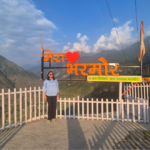
It was the morning of 27th June 2026, around 6 AM, when we checked out of HPTDC Hotel Gauri Kund in Bharmour. This was the day we had planned to cover Kugti Village and trek up to Kartik Swami Temple in Kugti, decide to shoot our vlog for youtube, and then return to the same hotel by evening.
Based on our conversations with the locals during our exploration of Bharmour on the previous day, the trek was looking quite easy. So, my team and I were very excited about the upcoming journey. According to the local people, it was just a normal trek and nothing too difficult.
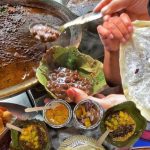
We kept confirming the information at almost every point. Whenever we met someone who seemed to be a local, we would ask about the trek. Like how long it would take, how difficult it is, and whether there was anything we should be prepared for? We asked people at tea shops, local food stalls, and even Kartik Sharma Ji, the grandson of the priest of the famous 84 Temples. We also spoke to the girls we had met at Barmani Mata Temple of Bharmour.
Almost everyone gave us the same impression, that it was a fairly easy trek. And honestly, after hearing the same thing from so many people, we started feeling quite confident about it.
But the reality turned out to be quite different for us.
One thing we soon realized was that people who have grown up in the mountains have a completely different level of strength and stamina compared to us. Whether it is the girl, women, or even small children we met along the way, they seemed naturally adapted to the mountains. Their daily life is connected with these slopes, trails, and steep climbs, so their bodies are much more comfortable with this kind of terrain.
For them, a trek that might take us several hours could sometimes be completed in almost half the time. And this was something we were about to experience ourselves on the Kugti trek.
The Journey from Bharmour to Kugti Village
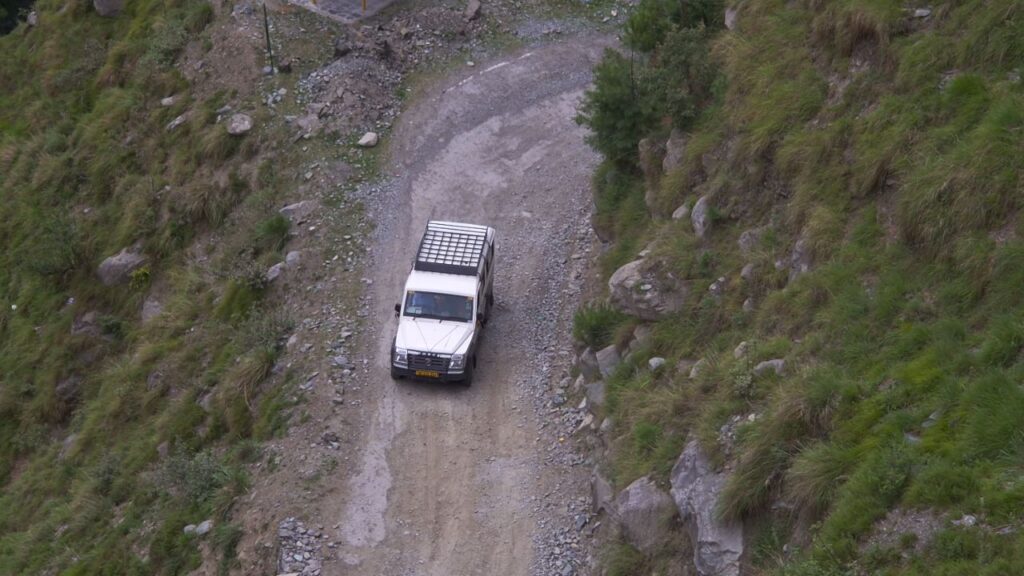
The distance from Bharmour to Kugti Village is around 25 kilometres. It is mostly a single road, but the journey itself is incredibly beautiful. As we started driving early in the morning, we could see the first rays of sunlight touching the mountain peaks. On one side, the road was carved into the mountain, while on the other side, small streams were flowing down through the valley.
While driving from Bharmour towards Kugti, you pass through places like Khund, Dunda, Hadsar, and finally reach Kugti Village.
Since we had started around 6 AM, we decided to take a short 10–15 minute stop at the famous 84 Temples to seek the blessings of Lord Shiva before continuing our journey towards Kugti Village.
After that, we continued driving. A little further along the route, we stopped once again to record some footage for our Kugti Village to Kartik Swami Temple vlog. The spot was absolutely beautiful. There was a metal bridge surrounded by mountains and greenery, and the view from there was amazing.
But there was one thing that made me a little nervous, the bridge was budging!
It was a metal bridge, so some movement is normal whenever someone walks or drives across it. Still, standing on it and feeling it move beneath you was a slightly scary experience. It definitely gave us a few nervous moments while recording.
We reached Hadsar at around 7:30 AM. According to the locals, this is an ideal time to reach this point while travelling along this route.
After Hadsar, we had decided that we wouldn’t stop unnecessarily. We wanted to reach Kugti Village and spend more time exploring and enjoying the trek rather than spending too much time on the road.
But just 2–3 kilometres after Hadsar, something caught our attention.
We saw two beautiful waterfalls coming down from the mountains and eventually joining together before flowing into the river Budhal (or Buddal). The sight was so beautiful that we couldn’t just drive past it.
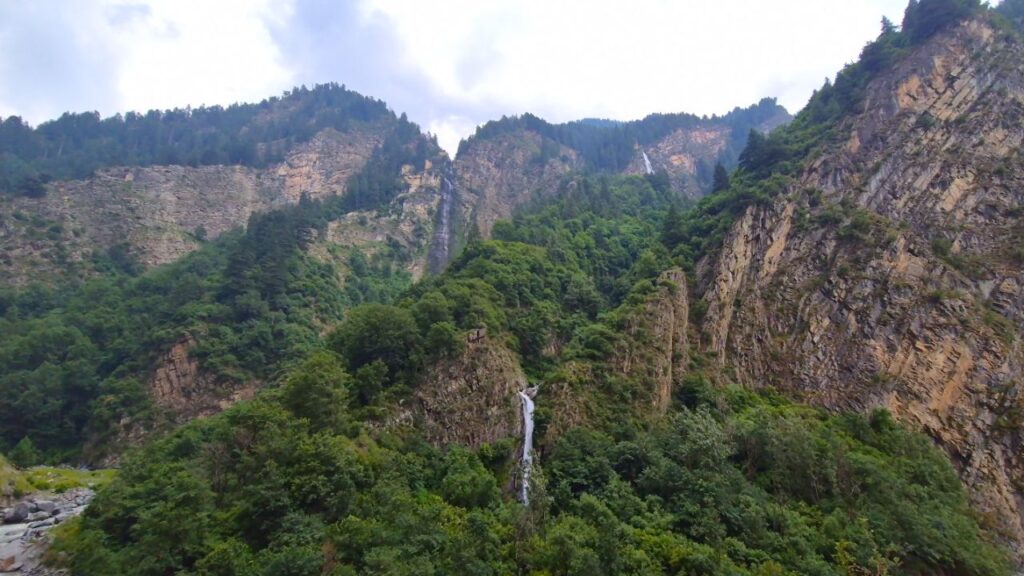
We stopped there and spent some time enjoying the view. At that moment, we were simply mesmerised by the scenery. But soon, we came to know that these two waterfalls were not considered ordinary waterfalls by the local people.
While we were on the trek, we met a local person who told us about the spiritual belief associated with these waterfalls.
According to him, one waterfall represents Paap, which means sin, while the other represents Punya, which means virtue. There is a local belief that, long ago, both waterfalls carried almost the same amount of water. With changing times, sinful behavior among people appears to be increasing, which is why the water level of one waterfall is also increasing. On the other hand, as Punya, or virtuous behavior, decreases, the water level of the other waterfall is believed to be going down.
This is a local belief, and we cannot say whether there is any scientific explanation behind it. But I am sure that when you stand there yourself and see the difference in the water levels, knowing the story behind it will certainly make the experience more interesting.
We spent another 10–15 minutes at the spot and then continued straight towards Kugti Village without making any more stops.
The drive from there was truly amazing. The mountains, streams, waterfalls, and the changing views around us made the entire journey feel like a part of the adventure itself.
However, there is one very important thing I would like to mention if you are planning to drive this route yourself.
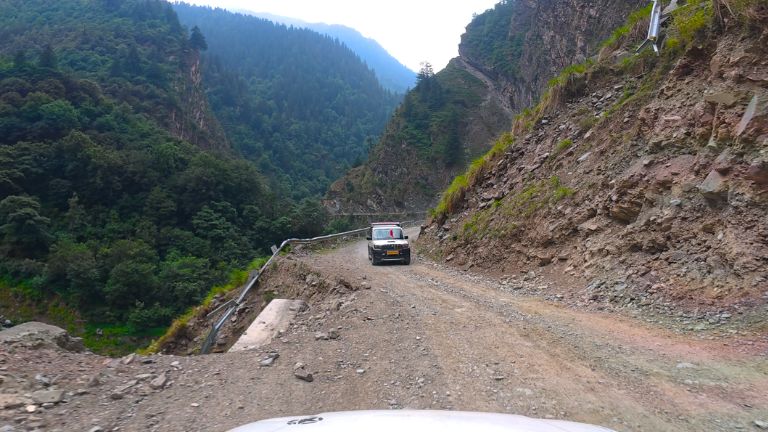
There are several sections along the road where rockfall is common. So, please don’t stop your vehicle just anywhere to take photographs or enjoy the view. Always look around carefully and make sure you are in a safe location before stopping.
Sometimes, the most beautiful view can be right next to the most dangerous spot. So enjoy the scenery, but always put safety first.
Reaching Kugti Village and Starting the Trek
Around 8:45 AM, we reached the entry point of Kugti Village. This is where you need to stop your vehicle because the road ends here. There are a few paid local parking facilities available, and parking usually costs around ₹100–₹200 per day.
We parked our car at Sharma Ji’s parking and then went to a local Dhaba for breakfast. We also tried to find a local guide, but unfortunately, we couldn’t find one. One local guide was there but were asking for higher prices.
Usually, local guides charge around INR 1,000–2,000 per day, depending on the crowd, season, and availability.
One of the locals then advised us to go without a guide. According to him, we would meet plenty of people along the way who could guide us about the route or help us if we needed any information. He simply told us, “Just talk to the locals you meet on the way.”
So, we decided to go ahead without a guide.
Even then, we were still quite confident that we would be able to complete the trek easily. Almost everyone we had spoken to was saying the same thing that it would take around 2–3 hours one way.
After finishing our breakfast, we packed everything and started our journey.
Exploring the Traditional Beauty of Kugti Village
Our first point on the trek was the famous Kugti Village itself. It isn’t very far from the parking area. It takes hardly 4–5 minutes to walk from the parking point and enter the village.
Kugti Village is divided into two parts, Upper Kugti and Lower Kugti. Most visitors don’t usually go towards Upper Kugti, while Lower Kugti falls directly on the route towards Kartik Swami Temple.
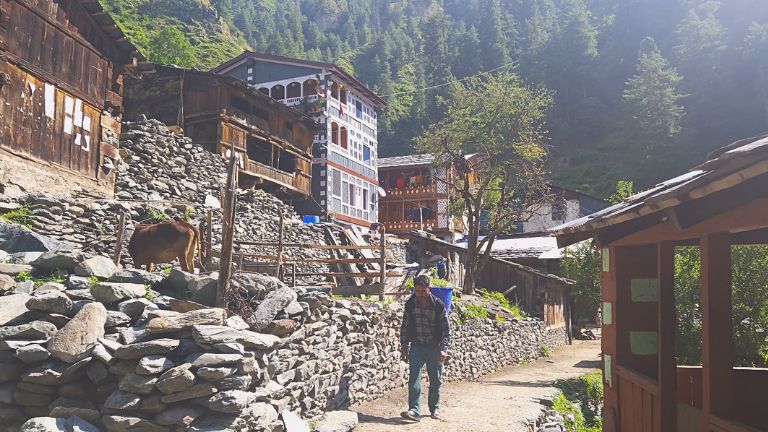
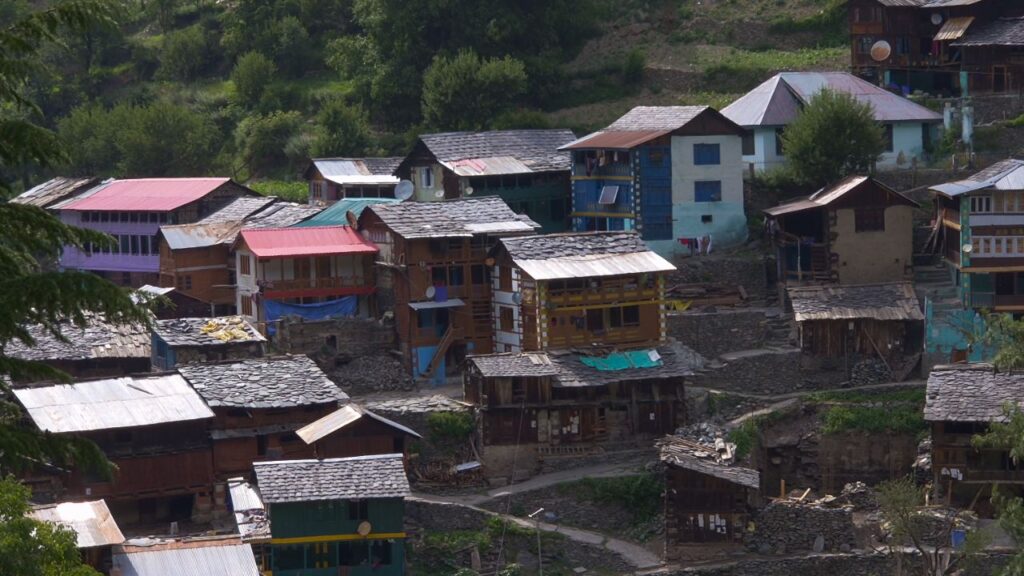
As soon as we entered the village, we were amazed by how beautiful and traditional it looked. Many of the houses here are more than 100 years old, giving the entire village a beautiful vintage feel.
A majority of the people still live in the traditional way. Mules are used for carrying goods, while cows and sheep are often kept in sheds on the ground floors of the houses. We could also see a beautiful water stream flowing down from another part of the village.
As we walked through the village, villagers were going about their daily routines. Some were working around their homes, while others were busy with their livestock and other traditional activities. We even heard locals offering us tea in their own local language.
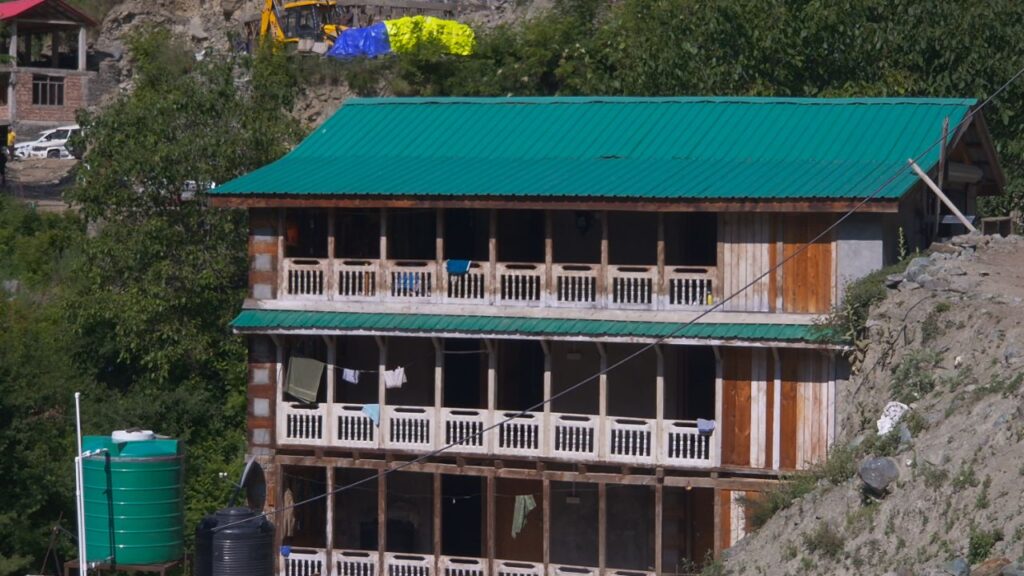
It was a completely different experience for us. There was no rush, no traffic, and no city-like noise. Everyone was simply busy with their everyday mountain life.
And the best part was that walking through this beautiful village was actually part of our route towards Kartik Swami Temple.
We spent around 15–20 minutes exploring and crossing the village before continuing towards the temple.
We also skipped visiting Upper Kugti at that time and decided that we would cover it on our way back. We asked a villager, who told us that it would take at least another 20–30 minutes to reach there. Considering our pace and the time we would need to cover Upper Kugti, we felt it could easily take an hour. So, we decided to skip it for the time being and keep it for our return journey.
Since we still had a trek and shoot ahead of us, we decided not to take that extra detour and continued towards Kartik Swami Temple.
Based on the information we gathered from the villagers, both villages seem to be the same. It is just that some families live in the upper part, while others live in the lower part.
The Trek Was Not as Easy as We Had Expected
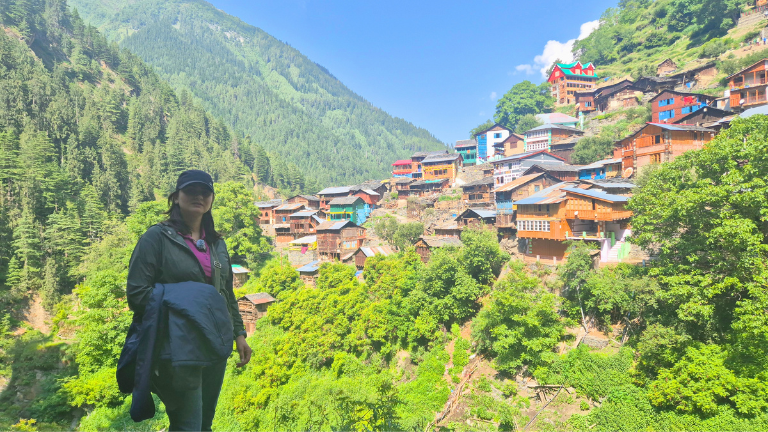
After crossing the village, we came across a steep stretch of around 500–600 metres. From this point, we got a beautiful view of Kugti Village from above. Looking back at the village surrounded by mountains was honestly one of the first moments when we felt that the trek was going to be something special.
But we also noticed something else.
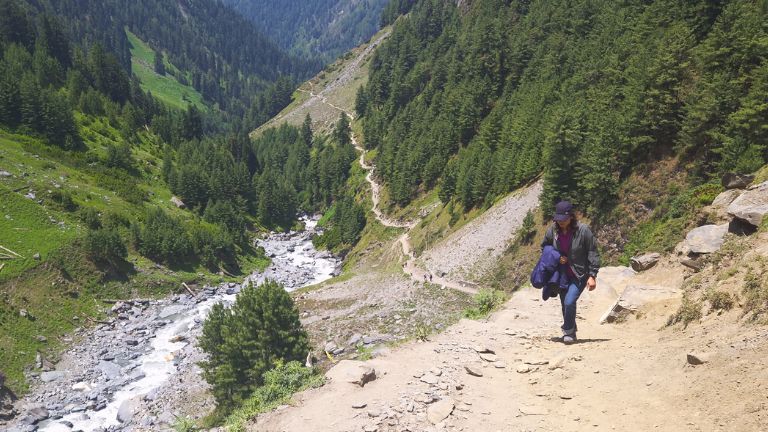
It took us around 5–6 minutes to cross that particular stretch, whereas we saw locals covering the same distance in just 1–2 minutes. That small difference made us think that maybe the trek was going to take us much longer than what the locals had told us.
After walking for a few more minutes, we met a couple from Bangalore. We decided to stop and ask them about the trek, the timing, the route, and how difficult they found it.
They told us that they had stayed overnight at the temple. They had started their trek the previous evening, on 26th June, at around 4 PM and reached the temple at approximately 8:30 PM. It took them about 4.5 hours one way.
However, they were not travelling completely on their own. They were going along with some locals who were also staying overnight at the temple.
According to them, the trek was moderate and quite pleasant during the evening because the sun wasn’t directly overhead and the temperature was much more comfortable.
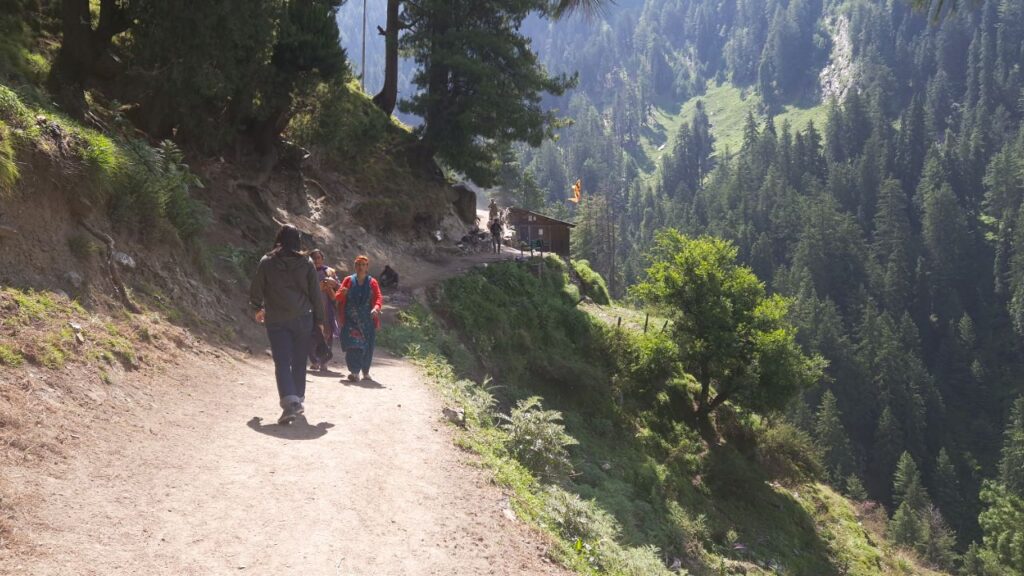
But for us, the situation was different.
It was already around 10 AM. If we took 4.5 hours just to reach the temple, that would put us at around 2:30 PM and that was only if we walked continuously without any major stops.
But we had another challenge. We weren’t just trekking; we were also shooting our entire journey for the vlog. We had to stop for photographs, videos, drone shots, and different locations along the way.
That was the moment when we started facing the reality of the trek.
Now, we couldn’t simply skip the temple because we were already on the route. At the same time, we didn’t want to rush through the journey and miss all the beautiful views and experiences that we had come for.
So, we decided on one thing. We wouldn’t waste unnecessary time, but we also wouldn’t skip a good shot whenever we found one.
What to Carry for the Kugti Kartik Swami Temple Trek
From there, we started picking up our pace.
And if you’re planning to do this trek during the daytime, there are a few basic things I would strongly recommend carrying with you.
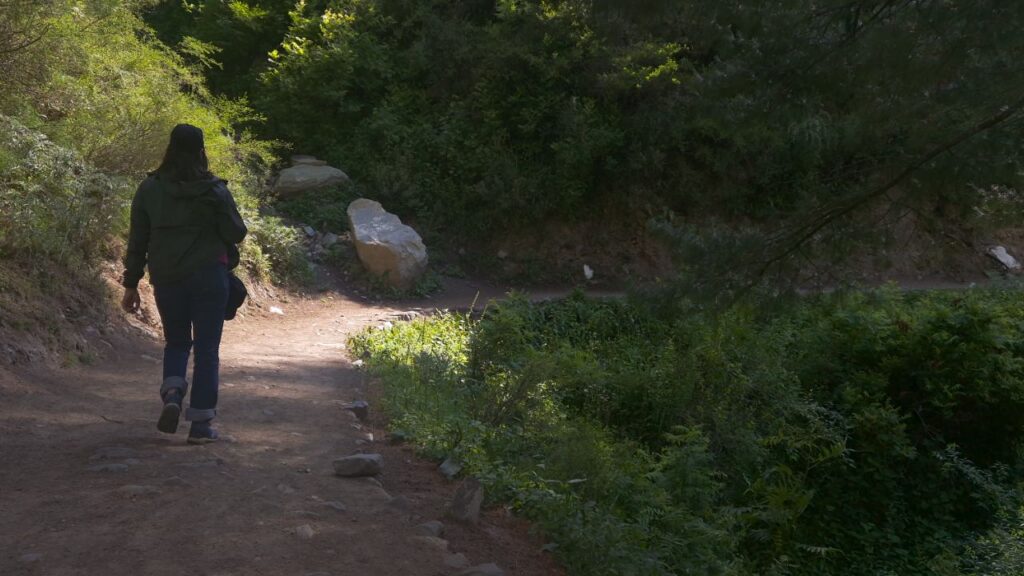
Keep your sunglasses with you, especially when the sun is strong. Carry glucose or an energy drink if possible, and make sure every person has at least one water bottle.
I would also recommend that everyone carry their own small backpack with their basic essentials. It is much better than putting everything into one person’s bag.
You also find small shops along the route where you can buy some basic things. But these shops are quite far apart, and there can be long stretches where you won’t find anything.
During the daytime, especially when the sun is directly overhead, trekking without basic essentials can become quite difficult.
So, don’t depend completely on the shops you may find on the way. Carry your water, energy source, sunglasses, and other basic necessities with you before starting the trek.
Trust me, once you’re several kilometres into the mountains, you’ll be glad you packed them.
The Real Himalayan Trek Begins
This was the point where the real trek finally began for us.
We walked around another kilometre ahead and came across a beautiful spot. There was a large tree providing shade to everyone passing through the trail. It looked like the perfect place to take a shoot break, so we decided to stop there and shoot a few scenes for our vlog.
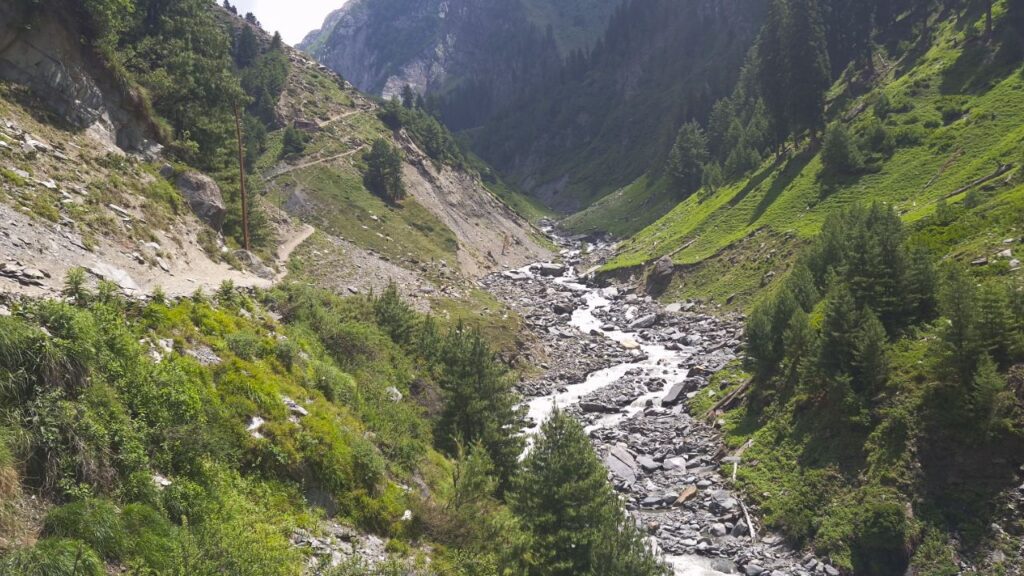
As soon as we settled down, we started noticing how beautiful the surroundings were.
It felt like the mountains were talking to the clouds. On the other side of the valley, we could see people from a nearby village working in their fields. And just above us, under the same tree where we had stopped, a group of shepherds was sitting and preparing their food.
At first, we thought they were preparing breakfast, but when one of our team members spoke to them, we came to know that they were actually preparing their brunch. The surprising thing was that they only eat twice a day and don’t usually have snacks or other food in between. This could also be one of the reasons why the shepherds are so strong and healthy.
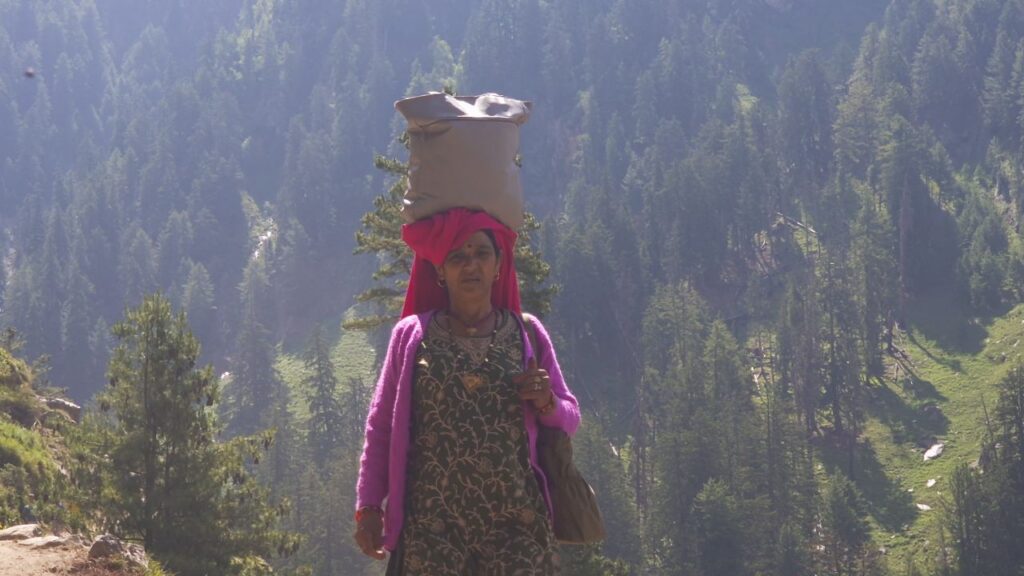
There was also a small shop nearby, but unfortunately, it was closed that day.
We spent around 15–20 minutes at this spot. Even though we were there mainly for the shoot, the break itself turned out to be an amazing experience.
The cool mountain air was blowing, and after walking for so long, that short break felt like a complete recharge. Sitting there, feeling the cold breeze and looking at the mountains, we could really feel the power and beauty of nature around us.
Once we finished the shoot, we immediately continued our trek. From that point onwards, we decided not to take any unnecessary breaks. We would walk continuously until we reached the next location where we wanted to shoot.
And we continued like this all the way until we reached the base of the temple.
Reaching the Base of Kartik Swami Temple
When we say the “base of the temple,” I mean the point where you cross a small water stream and then start the final steep climb towards Kartik Swami Temple.
By this point, we had already experienced almost everything we had expected from a Himalayan trek. We had seen large groups of shepherds moving through the mountains, small streams flowing with their soothing sounds, birds chirping around us, and mountains seemingly playing with the clouds. It was exactly the kind of Himalayan experience we had imagined when we started this journey.
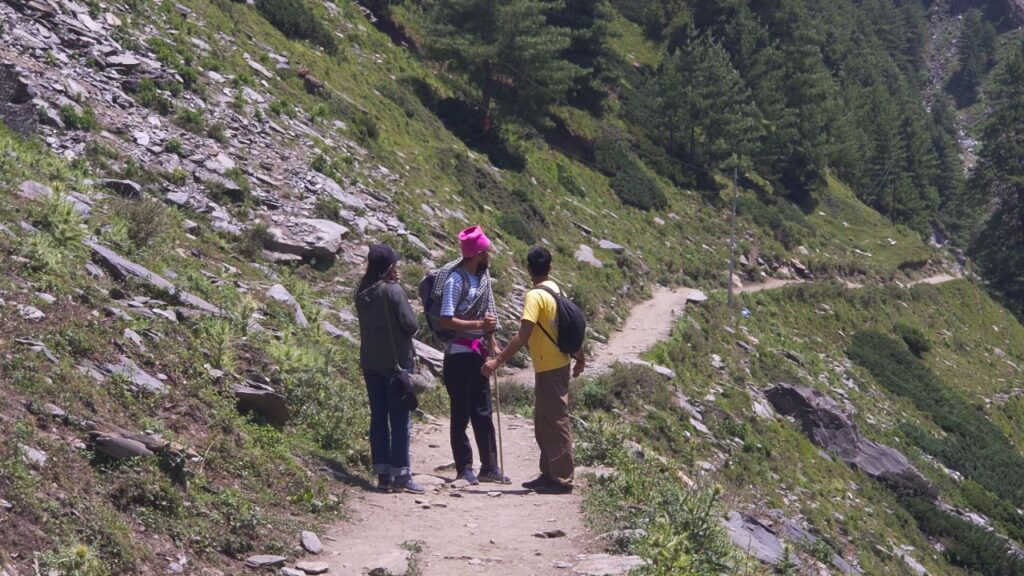
Looking at that final climb from below, it appeared to be the most difficult part of the entire trek. But surprisingly, according to our experience, it turned out to be the easiest part.
We don’t know whether it was the energy of the place, the excitement of finally reaching the temple, or simply the feeling that we were almost there, but somehow, that steep section that looked so difficult from a distance was actually the easiest part for all of us.
But this was also the turning point in our story. When we finally reached the last base of the temple, the first thing we did was check the time. And honestly, we were shocked to see that it was already 12:15 in the afternoon.
We were genuinely happy because we had reached this point much earlier than we had expected. It wasn’t the end yet, but we knew that the final climb was now in front of us. It was clear to us that it would hardly take another 30–40 minutes to reach the temple.
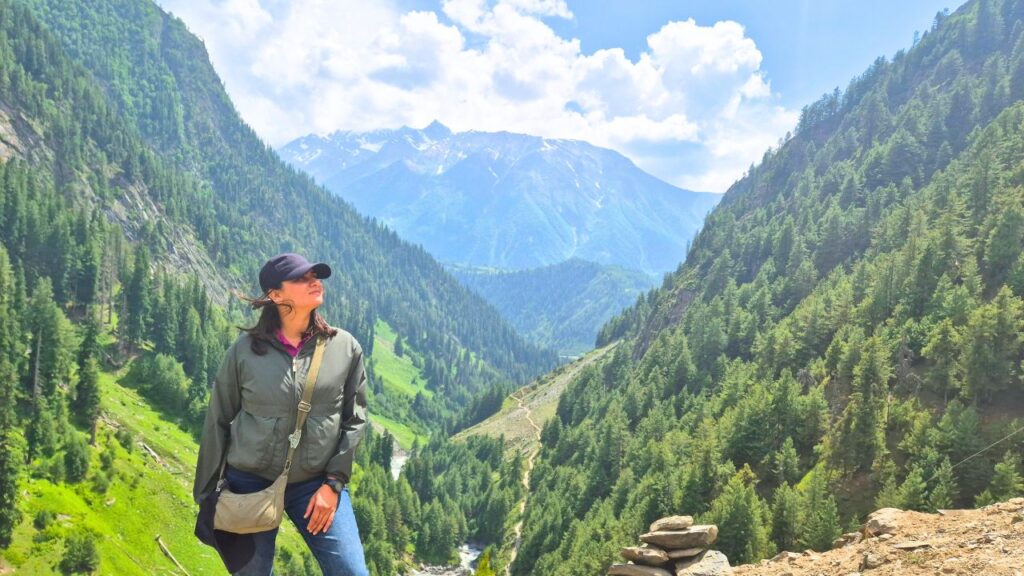
Overall, it had taken us around four hours to reach the temple area. Considering that we had stopped several times for shooting, taking photographs, talking to people, and enjoying the views, we felt that this was actually a pretty good time.
There was a different kind of happiness among all of us when we realized that we were finally so close.
And then came the final climb.
Kartik Swami Temple Kugti – The Final Destination
Within the next few minutes, we reached Kartik Swami Temple.
The temple itself was truly amazing. Its traditional architectural style, the peaceful surroundings, and the stories associated with the temple made the entire experience feel even more special.
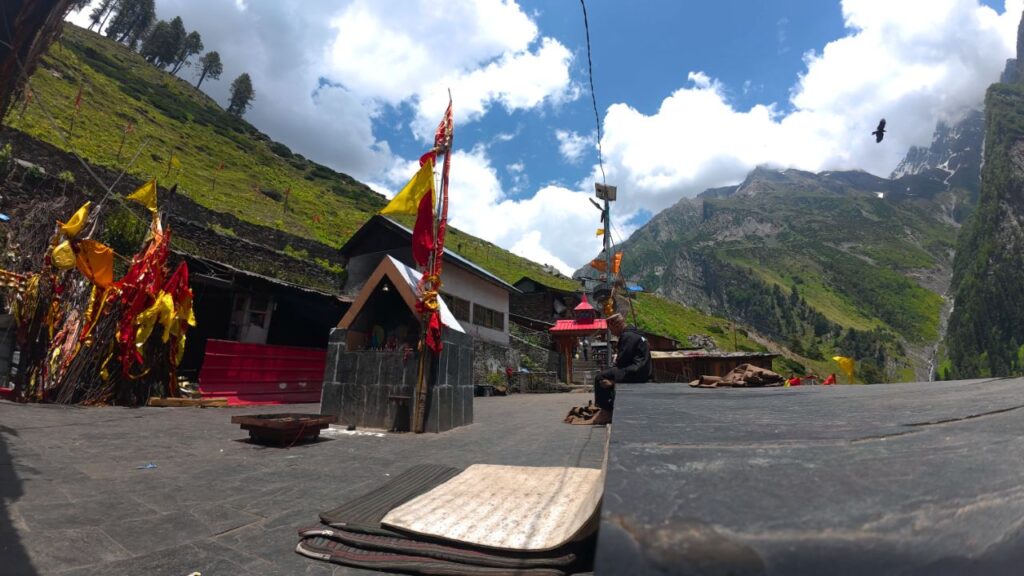
Kugti Kartik Swami Temple is also known as Kelang Wazir. Just near the temple, there is another beautiful temple dedicated to Marali Mata, who is locally believed to be the younger sister of Kartik Swami.
We spent around 30-40 minutes at the Kartik Swami Temple. During our visit, local people were chanting and singing bhajans, and we joined them for a while. Sitting there, listening to the chanting and being surrounded by the mountains, was a completely different experience from anything we had experienced during the trek.
After spending some time at Kartik Swami Temple, we headed towards Marali Mata Temple, which is around 200 metres away.
We spent another 30-40 minutes there. According to local belief, Marali Mata Temple was not originally located at this spot. It is believed that local devotees requested the goddess to settle here, close to Kelang Wazir Kugti, so that people could easily visit both temples during the same journey.
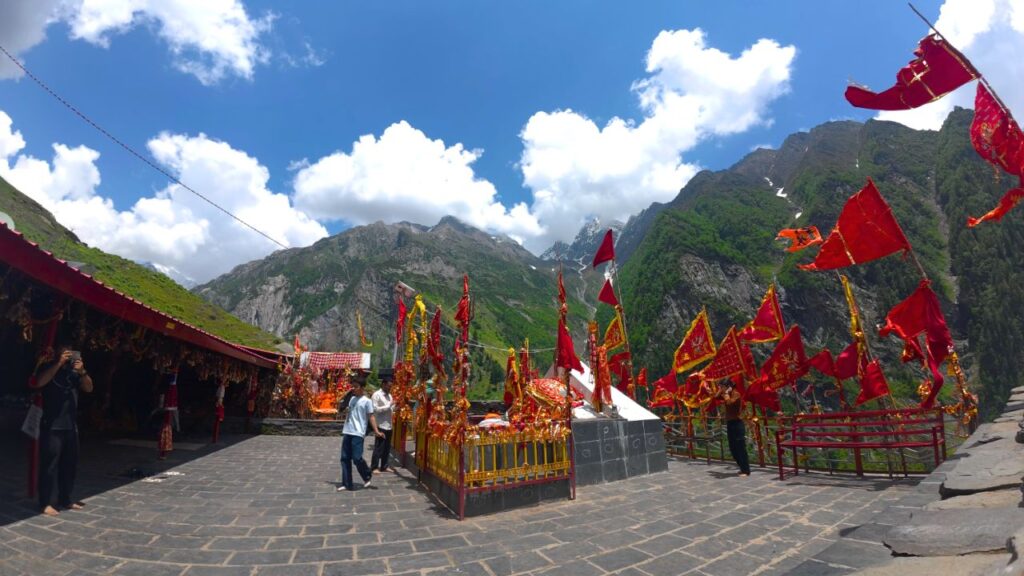
Standing at these temples, it genuinely felt as if we had reached a place very close to the clouds.
The surroundings were so peaceful that you almost felt like talking to nature and leaving everything else behind. There was something about the silence, the mountains, the clouds, and the spiritual atmosphere that made us forget about everything happening in the outside world.
For me, this was one of the most beautiful experiences of the entire journey.
If you are travelling to Bharmour, I would definitely recommend adding this place to your list. The trek, the village, the people, the temples, and the entire Himalayan landscape make the journey worth experiencing.
Kartik Swami Temple at Kugti is also locally regarded as the only temple dedicated to Kartik Swami in Himachal. People from several surrounding villages visit the temple for darshan and blessings.
There is also a local belief that wishes of those who undertake this journey and visit the temple are fulfilled.
Whether you come here for faith, adventure, trekking, or simply to experience the mountains, one thing is certain, the journey to Kugti Kartik Swami Temple is an experience you are unlikely to forget.
Staying Overnight at Kugti Kartik Swami Temple
Some people also prefer to stay overnight here, but keep in mind that you should not expect any luxury facilities. There are a few small local shops and dhabas that also provide basic accommodation at very reasonable prices.
What makes this place even more interesting is that you won’t only find visitors from different parts of India. You may also come across foreign travellers who have travelled all the way here to experience the beauty, peace, and raw nature of the Himalayas.
Overall, it was an amazing experience for us and, in my opinion, this place is perfect for anyone who loves nature, trekking, spirituality, and exploring offbeat destinations.
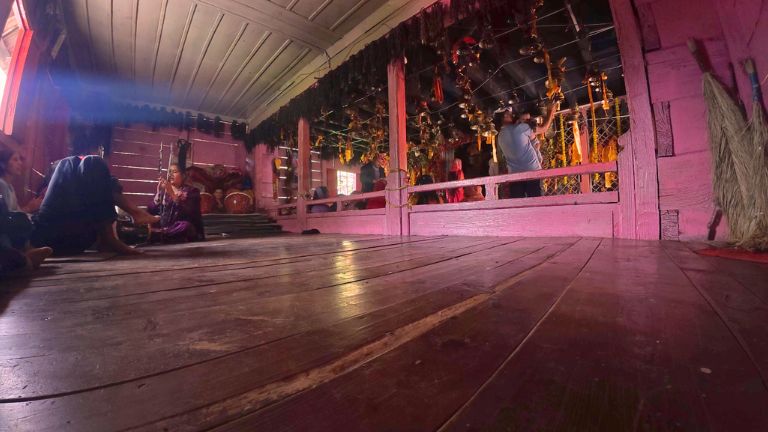
However, there is one very important thing you should know before planning this trek, the entire route is almost completely without mobile connectivity.
Kugti Village is the last place where you may get Jio network connectivity. Once you leave Kugti Village and start walking towards Kartik Swami Temple, you are basically leaving your regular connected life behind.
No calls, no constant notifications, no social media-just you, the mountains, the trails, the clouds, and nature.
In a way, after Kugti Village, you are connected to nature and disconnected from your everyday life.
And honestly, that is one of the things that makes this journey so special.
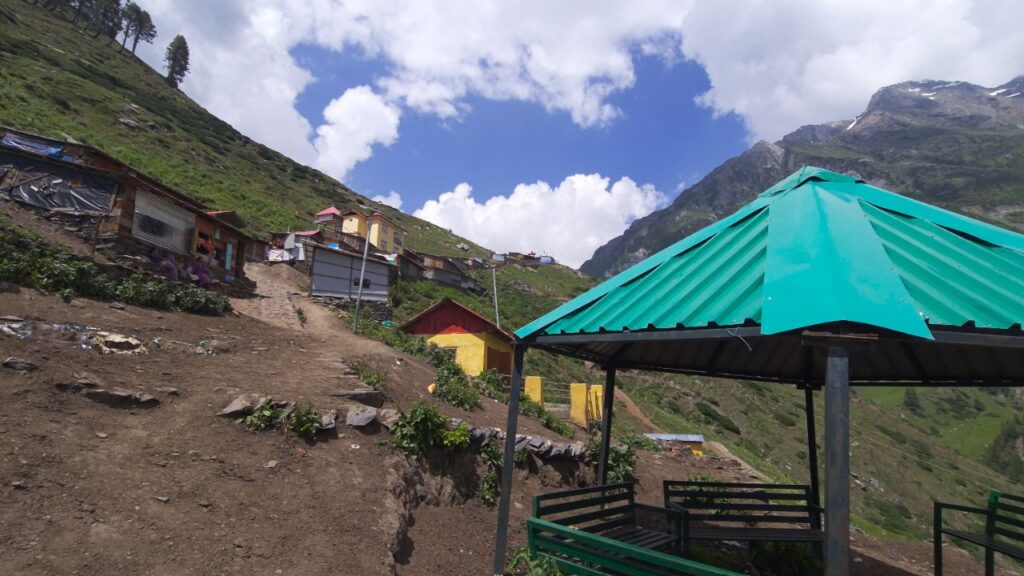
Thank you for reading our entire experience. Very soon, we will be bringing you the complete video of our journey from Kugti Village to Kartik Swami Temple Kugti on our Real Himachal YouTube channel.
Stay tuned with us for more travel stories, experiences, and blogs from Chamba and Himachal Pradesh. More is coming soon!
Thank you!